
If you've lost a tooth, or you're facing the possibility of losing one, you've probably already searched the words "dental implants" more than once. They're the closest thing dentistry has to a permanent replacement for a natural tooth - stable, long-lasting, and designed to function just like the real thing. But before anyone starts picturing the finished smile, there's a more practical question to answer first: are you actually a good fit for implants in the first place?
That question matters more than most people realize. Dental implants aren't a one-size-fits-all solution, and not every patient who wants them is ready for them on day one. Bone density, gum health, medical history, and even certain habits like smoking all play a role in whether an implant will succeed long-term. The good news is that most of these factors can be evaluated clearly, and many obstacles that once ruled someone out - like low bone volume - can now be addressed with modern techniques.
This is exactly why we built our Am I a Candidate evaluation into the process at Smiles of Niles. Rather than guessing or relying on general information you find online, you get a real, personalized answer based on your own mouth, your own health history, and your own goals. In this article, we'll walk through what actually determines implant candidacy, what can disqualify someone temporarily versus permanently, and how a proper evaluation sets the stage for a result that lasts.
In This Article
What Actually Determines Whether You're a Candidate
At its core, implant candidacy comes down to one basic question: can your jaw support a titanium post well enough for it to fuse securely and stay that way for years? That fusion process, called osseointegration, is what makes implants so different from dentures or bridges. The implant doesn't just sit near the bone - it actually bonds with it, which is why a thorough evaluation of your jaw structure is the starting point for everything else.
Beyond the bone itself, we look at the health of your gums, since active gum disease has to be treated before an implant can be placed safely. We also review your overall health history, because certain conditions affect healing speed and the body's ability to integrate the implant properly. Finally, we factor in lifestyle habits, particularly smoking, which can significantly slow healing and raise the risk of implant failure if it isn't addressed beforehand.
None of these factors exist in isolation. A patient with slightly low bone density but excellent gum health and no smoking history might be in a very different position than someone with the opposite combination. That's why candidacy isn't a simple yes-or-no checklist - it's a full picture, and it's one best evaluated in person rather than estimated from a list of symptoms online.
Bone Density: The Factor Most Patients Don't Expect
When teeth are lost, the jawbone that once supported them begins to shrink over time. This happens because the bone loses the stimulation it used to get from chewing forces transmitted through the tooth root. The longer a tooth has been missing, the more bone loss tends to occur, which is one reason patients who've gone years without replacing a missing tooth sometimes discover they have less bone volume than they expected.
For a long time, low bone density was treated as a dead end for implant treatment. That's no longer the case. Bone grafting procedures can rebuild the volume and density needed to support an implant, and sinus lifts can address bone loss specifically in the upper back jaw, where the sinus cavity often limits available space. These procedures add time to the overall treatment timeline, but they turn "not a candidate" into "a candidate, with a bit of preparation first."
A 3D scan during your evaluation gives us a precise measurement of bone height, width, and density in the exact area where an implant would go. This is far more reliable than a visual exam or a standard 2D X-ray, and it's part of why our Am I a Candidate assessment includes detailed imaging rather than a quick visual check.
Medical Conditions and Medications That Affect Eligibility
Your general health plays a bigger role in implant success than most patients anticipate. Conditions that affect blood flow, immune response, or bone metabolism can all influence how well an implant integrates. This doesn't automatically rule anyone out, but it does mean your medical history needs to be reviewed carefully and sometimes coordinated with your physician before moving forward.
- Uncontrolled diabetes: Blood sugar that's poorly managed can slow healing and increase infection risk, though well-controlled diabetes is generally not a barrier to treatment.
- Osteoporosis and certain bone medications: Some medications used to treat osteoporosis affect bone remodeling and require a conversation with your prescribing doctor beforehand.
- Autoimmune conditions: These can affect healing speed, so timing and coordination with your medical team may be part of your treatment plan.
- Active gum disease: Infection in the gums must be resolved first, since it can compromise the implant site; our gum disease treatment addresses this before implant planning begins.
- Tobacco use: Smoking restricts blood flow to the gums and bone, meaningfully raising the risk of implant failure if it isn't reduced or stopped during healing.
None of these conditions are automatic disqualifiers on their own. What matters is understanding how they apply to your specific situation, which is exactly what a one-on-one evaluation is designed to clarify.
Common Reasons People Think They're Ruled Out (But Aren't)
We hear a surprising number of reasons patients assume they can't get implants, and most of the time, those assumptions turn out to be outdated or incomplete. Age is one of the biggest ones - there's no upper age limit for implants as long as you're in reasonably good health and your bone can support the procedure. We've placed implants successfully for patients well into their 70s and 80s.
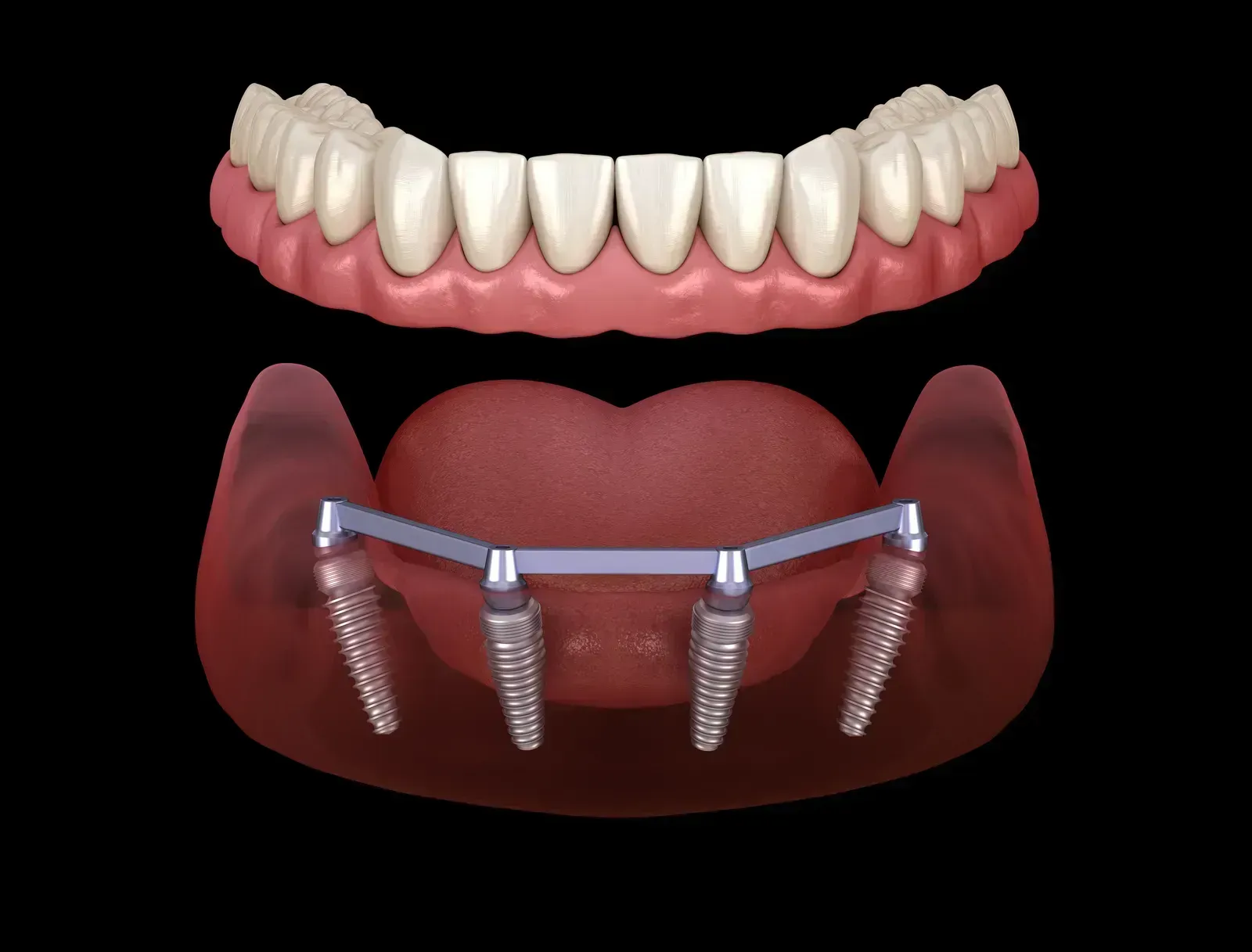
Another common misconception is that losing several teeth, or even most of your teeth, takes implants off the table entirely. In reality, options like full mouth implants were developed specifically for patients in this situation, replacing an entire arch of teeth with a fixed, implant-supported solution rather than a removable denture. Patients are also sometimes told they need a certain amount of bone before anything can be discussed, when in fact grafting procedures often solve that problem within the same overall treatment plan.
If you were told "no" years ago, it's worth asking again. Implant technology, imaging precision, and grafting techniques have all advanced considerably, and a case that wasn't feasible a decade ago is often straightforward today.
What Happens During a Candidacy Evaluation
A proper candidacy evaluation is more thorough than a quick look in your mouth. It typically starts with a conversation about your dental and medical history, including any medications you take and any prior dental work in the area being considered. From there, we take detailed images of your jaw, usually including a 3D scan that shows bone volume and density far more clearly than a standard X-ray.
We also examine your gum tissue and remaining teeth, since the health of surrounding structures affects both the implant procedure and its long-term success. If anything needs to be addressed first - an infection, a cavity, early gum disease - we'll talk through that as part of the plan rather than treating it as a separate, disconnected step.
By the end of the visit, you'll have a clear answer: whether you're ready to move forward with implants now, whether preparatory treatment like a bone graft or root canal therapy is needed first, or whether a different restorative option might serve you better. You'll also get a realistic sense of timeline and what to expect at each stage, which removes a lot of the uncertainty that keeps people from starting treatment in the first place.
What Comes After You're Approved
Once you're confirmed as a candidate, the next conversation is about which implant approach fits your situation best. Some patients need a single implant to replace one missing tooth, while others are considering a larger restoration involving multiple teeth. Reviewing what are your options at this stage helps you understand the differences between single implants, implant-supported bridges, and full-arch solutions before committing to a specific plan.
It's also the point where most patients start asking practical questions about the procedure itself - how long it takes, what recovery looks like, and how soon they'll have a functioning tooth again. Our what to expect resource walks through the placement procedure and healing timeline in detail, so there are no surprises once treatment begins.
Getting a clear "yes" on candidacy is genuinely the hardest part for most people, simply because it's the unknown. Once that question is answered, the rest of the process becomes a series of scheduled, predictable steps rather than an open-ended decision.
Key Takeaways
- Candidacy depends on bone density, gum health, medical history, and lifestyle habits like smoking - not any single factor alone.
- Low bone volume is no longer an automatic disqualifier; grafting and sinus lift procedures can rebuild the bone needed for implants.
- Age alone does not rule anyone out, and multiple missing teeth can often be addressed with full-arch implant solutions.
- A proper evaluation includes a 3D scan, a gum and tooth assessment, and a full health history review - not just a visual check.
- If you were told "no" in the past, it's worth a second evaluation, since techniques and technology have advanced significantly.
Frequently Asked Questions
How long does a candidacy evaluation take?
Most evaluations are completed in a single appointment, including the imaging and consultation. If additional specialist input is needed for a specific medical condition, we'll let you know right away and coordinate that step so it doesn't delay your overall timeline unnecessarily.
What if I'm not a candidate right now?
A "not yet" answer is far more common than a permanent "no." Often it simply means addressing gum health, treating an infection, or completing a bone graft first. We'll walk you through exactly what's needed and roughly how long that preparation will take before implants can move forward.
Can smokers get dental implants?
Smoking increases the risk of implant failure because it restricts blood flow and slows healing, but it doesn't automatically disqualify every patient. Many patients successfully complete implant treatment by reducing or pausing smoking during the critical healing period, which we'll discuss during your evaluation.
Is the evaluation the same as starting treatment?
No. The evaluation is a diagnostic step that answers whether and how implants can work for you. It doesn't commit you to treatment - it gives you the information needed to decide confidently, including timeline, any preparatory work, and which implant approach fits your case.
What if implants aren't the right fit for me?
If implants aren't the best option after evaluation, we'll talk through alternatives such as dental crowns or bridgework, depending on which teeth are affected and what will serve your long-term oral health best.
Getting a Clear Answer Is the First Real Step
There's a lot of uncertainty built into the idea of "maybe I need an implant someday," and most of that uncertainty disappears the moment you get a real evaluation. Bone density can be measured, gum health can be assessed, and medical considerations can be discussed openly, which replaces guesswork with an actual plan tailored to your mouth and your health.
Whether you're dealing with a single missing tooth or considering a more extensive restoration, the path forward starts with knowing where you stand. That clarity is the entire purpose behind our candidacy evaluation, and it's often the difference between putting off a decision for years and finally moving toward a smile that functions the way it should.